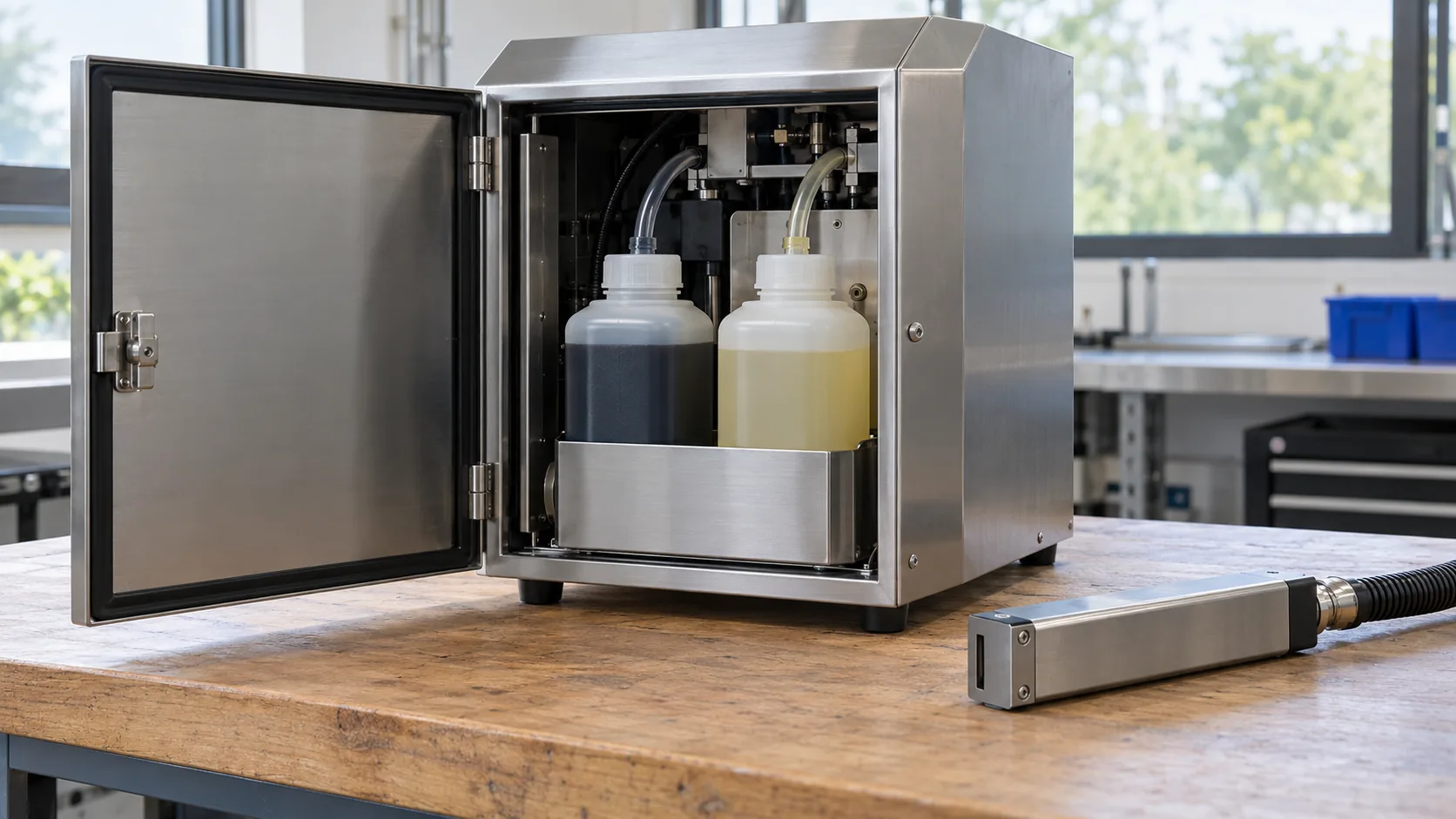
A hot-foil coder transfers an impression from physical type through coding foil onto the package surface. Review the type-change routine, foil and supported contact area before deciding whether it suits the information your line must print.
Universal Labeling Systems’ C205 page describes a hot-stamp unit with physical type and a holder. It is one equipment example. Its specifications should not be treated as universal settings for another coder or for a film installation.
Start with the message-change task
Write the exact message and identify which characters change between jobs or batches. Ask who prepares the type, who checks its orientation and how the first acceptable impression is retained. A mirror-image type face can be hard to assess by eye, so compare the actual impression with the approved message.
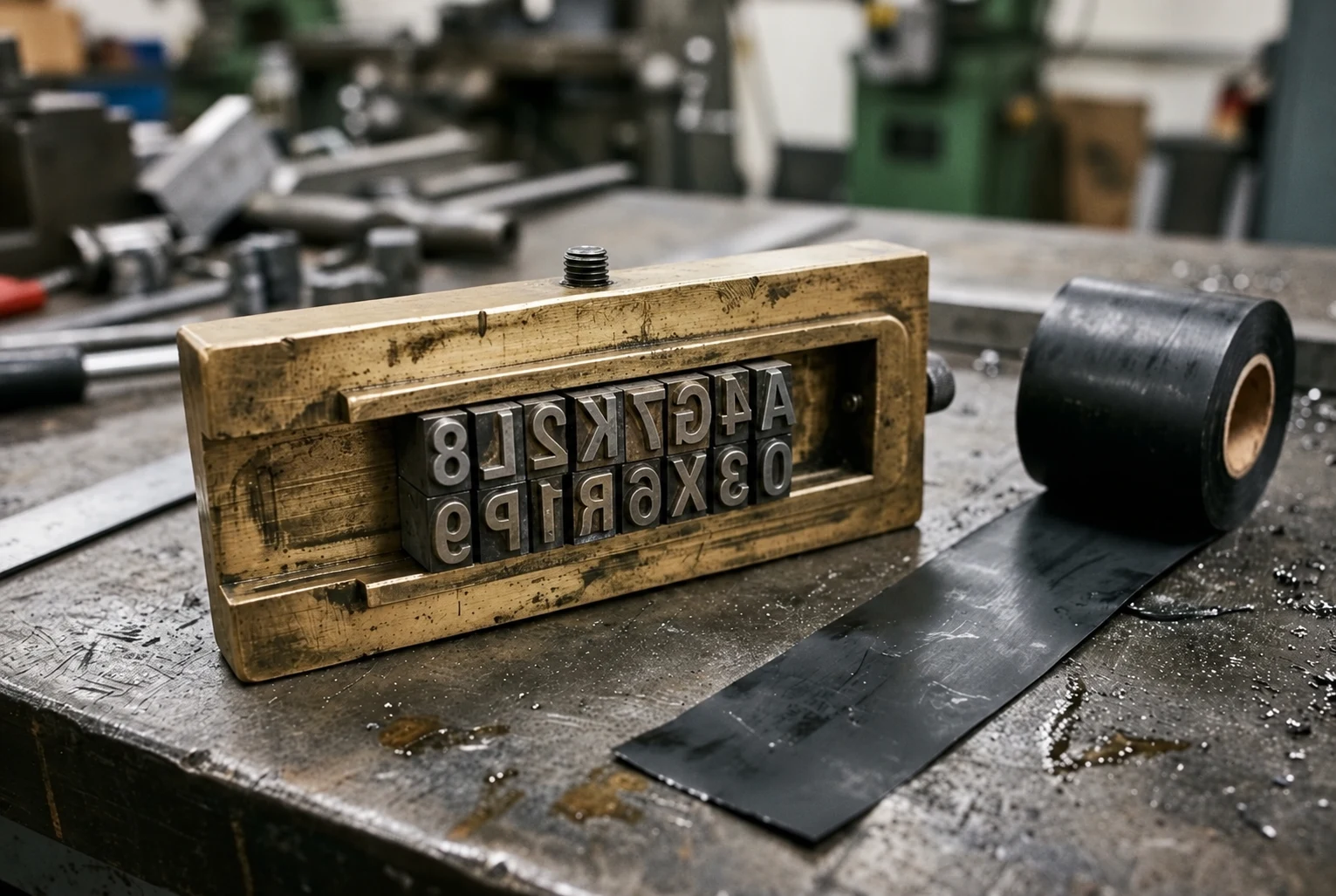
Separate character accuracy from impression quality. The right date can still transfer incompletely, and a sharp impression can contain the wrong date. Record both results at changeover.
| Design question | Input needed | Trial observation |
|---|---|---|
| What changes? | Approved message and change frequency | Correct first impression after changeover |
| Where is the code? | Receiving face and package drawing | Location relative to folds and seals |
| Which foil and material? | Supplier references and surface information | Completeness and agreed durability check |
| How is contact supported? | Installed station drawing | Even impression without unacceptable distortion |
| When does printing occur? | Host-machine sequence | Correct timing during run and restart |
Keep foil, film and contact conditions together
Use the actual production material and the intended coding foil for the trial. Record the references and the supplier’s setup procedure. Temperature, force and dwell belong to that combination and machine; increasing heat is not a substitute for finding an alignment or support problem.
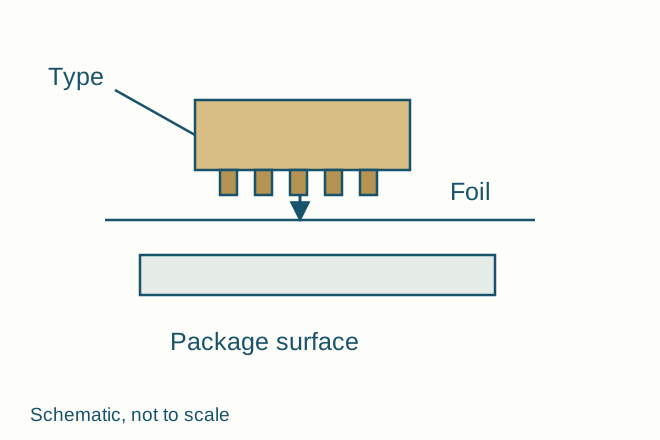
The contact schematic separates the physical type, foil and receiving surface. It supplies no operating temperature, pressure or clearance. Use the model’s instructions and the responsible installer’s assessment for adjustments and maintenance.
Check the code after the next handling operation as well as just after printing. The project may need a durability check on a folded, refrigerated or packed sample. Decide the method before comparing impressions, and retain examples that show incomplete transfer or material distortion.
Compare the digital alternative on changeover needs
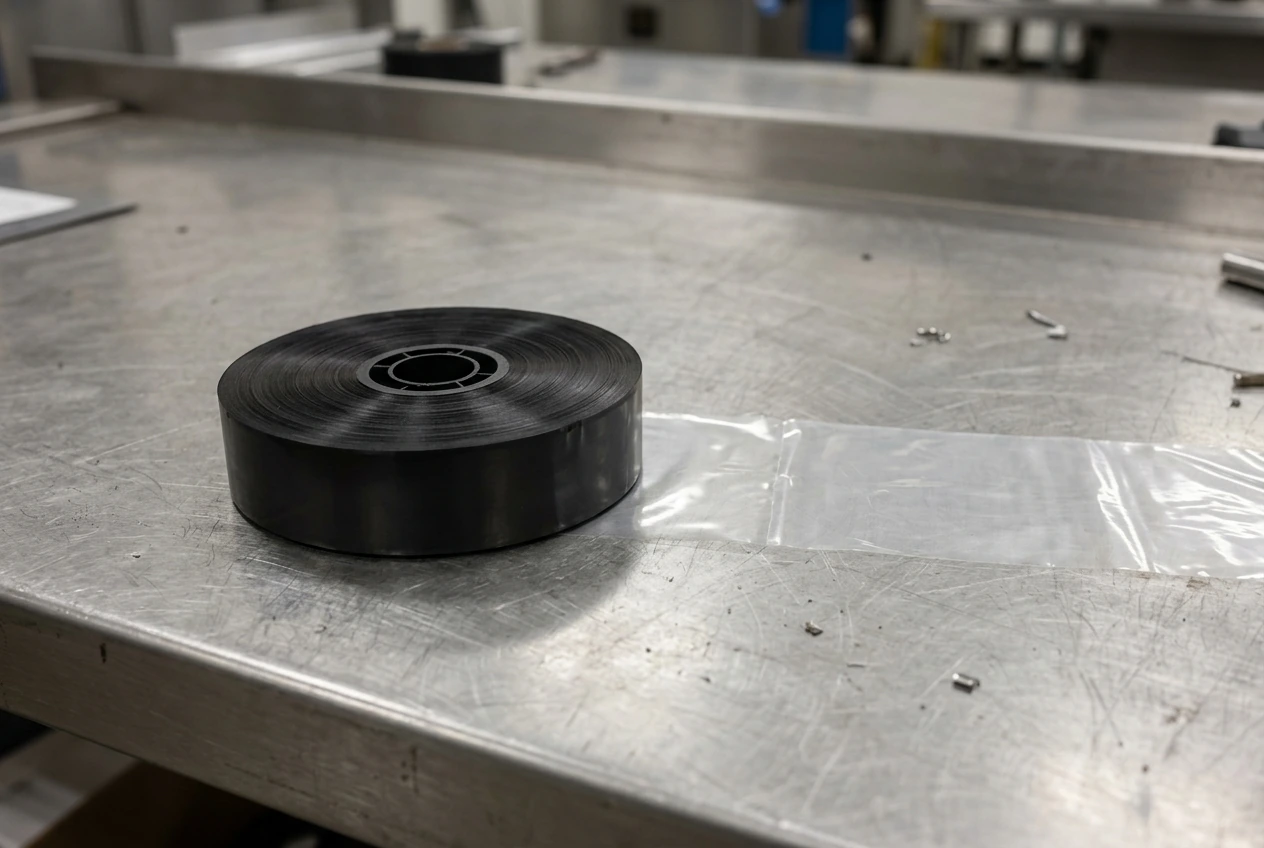
A digital thermal transfer overprinter uses a ribbon and an electronically generated image. Markem-Imaje’s TTO description identifies flexible packaging as its intended material family. This can make message management a different task, while leaving film, support and timing interfaces to be resolved.
Use the TTO integration guide if the message needs frequent variation or a more complex image. Avoid choosing by that feature alone: compare how each option fits the current station, how operators replace consumables and which faults the line can recognise.
Build the changeover record
Before the trial, prepare the approved text, a package drawing with the code zone and the intended consumable references. During the trial, record the installed settings, first impression, placement and any intervention. On completion, preserve a legible accepted sample and identify the person who checked the message.
Include a planned stop and restart. Confirm whether the host machine can resume without leaving missing or misplaced impressions, and document the response when the coder is unavailable. The integrator should define any interlock or reject sequence rather than relying on an operator’s memory of the expected sound or movement.
Decide whether the task fits
A physical-type arrangement can remain a candidate when the message and change routine suit the production task and the actual package passes the agreed evaluation. A model-specific sample or a catalogue image cannot settle that decision for a different line.
Return to packaging coding machines for the broader selection discussion, or use the substrate record to document why a trial impression survives its intended handling.