The name of a substrate does not tell you whether a code will survive handling. Compare inkjet compatibility on the actual film, glass or carton surface, with the same coating, moisture and downstream contact conditions expected in production.
The output is a sample record that another person can repeat. It supports a decision about a specified ink and surface combination, rather than a blanket approval for all plastics or all glass.
Identify the face that receives ink
Record the material supplier, lot, coating and printed side. For film, distinguish the outside printing surface from the inside sealant layer. For cartons, state whether the code sits on bare fibre, a printed area, a varnish or a label. For a glass bottle, describe its surface at the coding station, including condensation if that occurs in normal use.
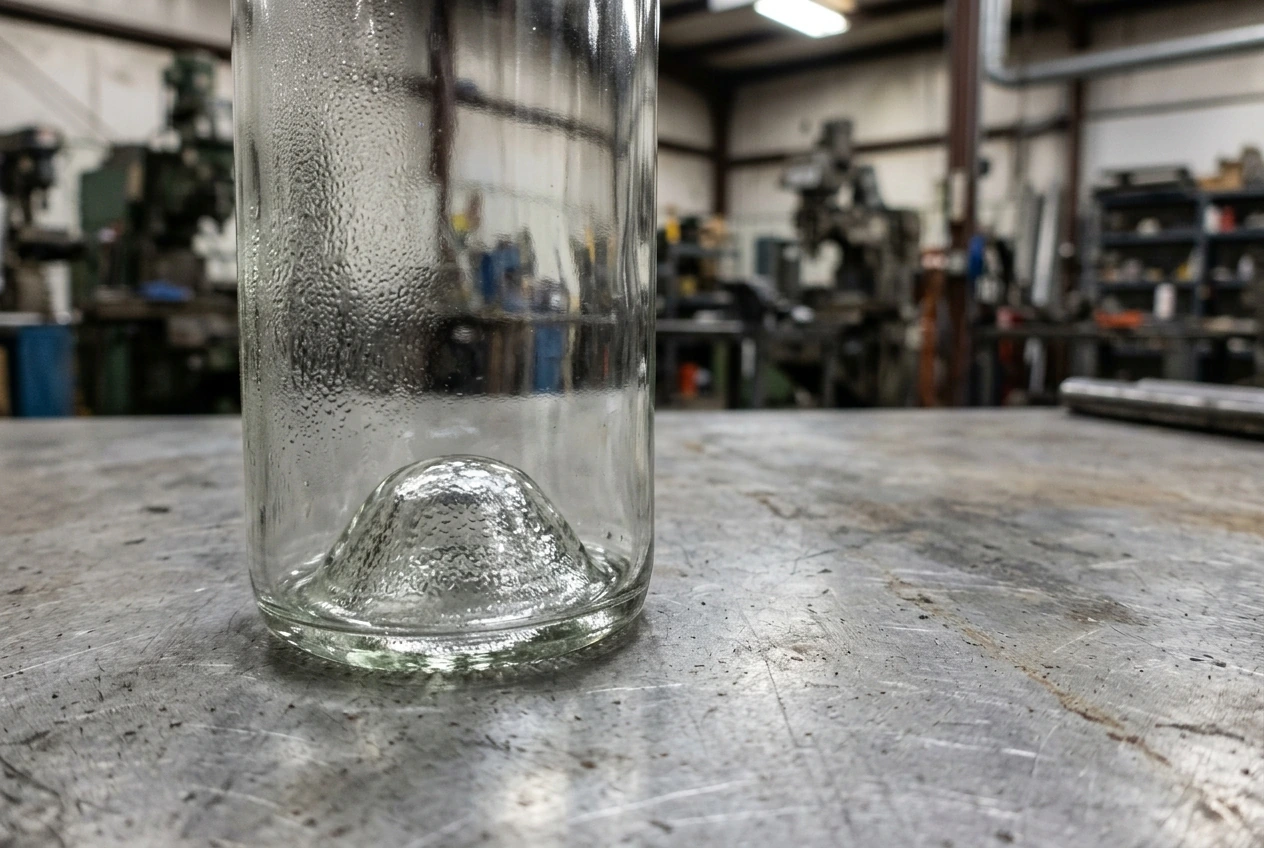
Videojet’s glass application guide distinguishes inks intended for condensation, rapid drying and other conditions. Those are different selection tasks. A code that survives refrigeration and one that must wash off in a returnable-bottle process should not share an unspecified durability requirement.
Separate the observations
The Videojet application note Inkjet inks for plastics explains that ink spreading, resin interaction with the plastic and solvent drying play different roles. Good-looking dots just after printing do not settle adhesion after handling. Read the manufacturer note before interpreting a surface treatment or changing the ink.
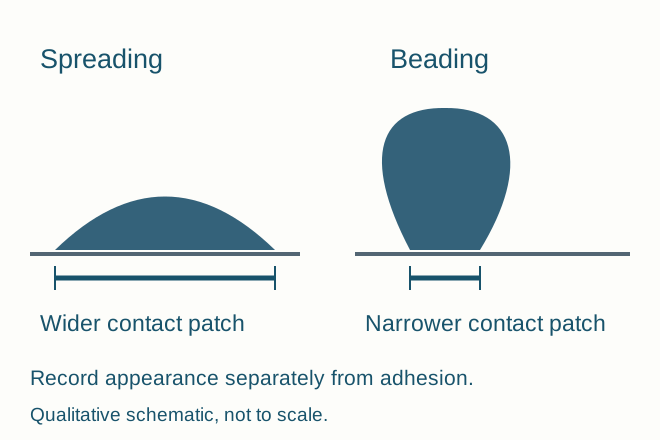
The broad drop and the rounder bead illustrate appearances to record immediately after printing. The note relates spreading to the receiving surface, while resin interaction and subsequent handling also affect adhesion. Keep the droplet observation separate from the later durability result.
Use the terms below as separate entries in the trial record. They help the team describe an observation without assuming its cause.
| Observation | What to record | What it does not establish |
|---|---|---|
| Wetting and dot appearance | Spreading, beading or merging on the stated face | Long-term adhesion |
| Drying before contact | Elapsed time and the actual contact event | Resistance to later washing or scuffing |
| Adhesion check | Agreed method, force or procedure, and result | Compatibility with every material lot |
| Downstream durability | Exposure, duration and post-exposure readability | A legal or food-contact approval |
Keep the test conditions comparable
Give every sample an identifier that links it to the ink, package lot and machine settings. Use an unprinted sample as a surface reference. If comparing two inks, keep the surface preparation and handling sequence consistent, and record any unavoidable difference.
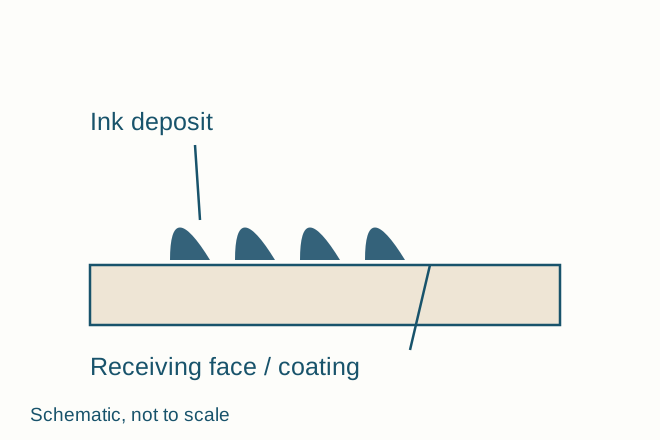
The drawing separates the receiving surface from the ink deposit. A surface treatment can alter the interface, but this diagram supplies neither a required treatment level nor an approval criterion. Those need the material and ink suppliers’ instructions and a test suited to the intended package.
Include the conditions that create contact soon after printing: a guide rail, a belt, another bottle or a case-packing step. For a wet process, state whether printing occurs before or after moisture appears. If the sample was manually dried for the demonstration, record that preparation; do not assume the result applies to an untreated production bottle.
Use this sample record
| Field | Entry to complete before testing |
|---|---|
| Sample identity | Package supplier, material revision and lot |
| Receiving face | Coating, treatment, print and surface condition |
| Ink configuration | Ink reference and compatible printer configuration |
| Printing condition | Station, orientation, settings and environment |
| Handling sequence | First contact, later exposure and elapsed times |
| Evaluation | Agreed method, acceptance rule and observer |
| Outcome | Raw observation, retained sample and follow-up action |
Avoid silently converting an informal rub into a standardised test. If a project requires a named method, use its current official procedure and document its scope. This worksheet simply organises the evidence.
Decide what the result permits
An acceptable result approves only the combination and conditions recorded. A change in coating, resin, supplier or returnable-bottle wash process should trigger a review of whether the trial still represents production. If several variables changed, isolate them in a follow-up comparison before blaming a single component.
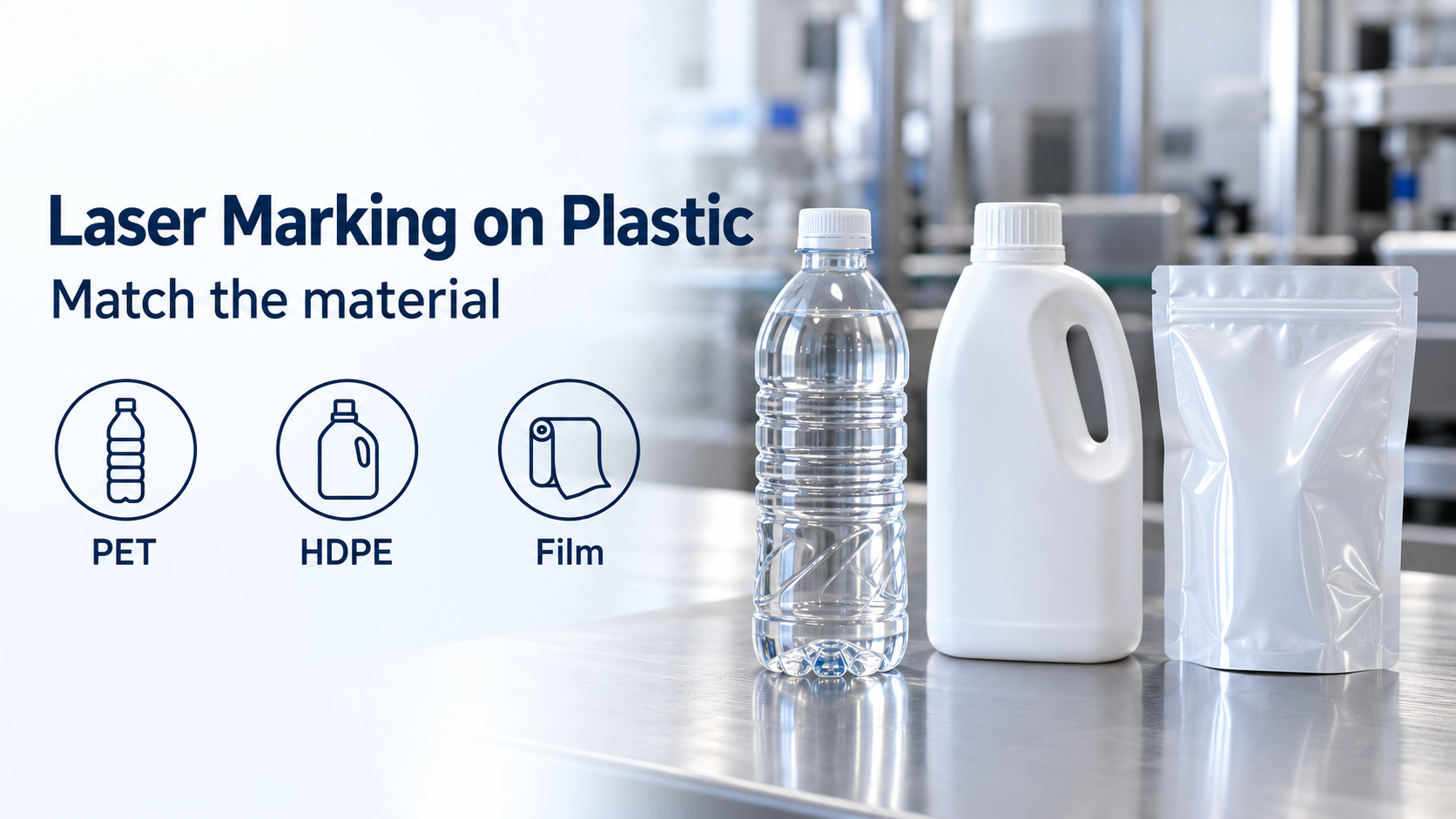
When the alternative is a permanent mark in the package itself, use the CO2, fiber and UV comparison for laser marking on plastic packaging to separate PET, HDPE and laminated-film evidence and identify the package-integrity checks needed alongside readability.
Use industrial inkjet line selection when the station itself remains undecided. The packaging coding category connects that process choice with the physical-type alternative.