
A thermal transfer overprinter must match the film movement and the physical space in the packaging machine. Confirm the receiving face, ribbon, print support and control sequence together before accepting a code sample as an integration result.
Markem-Imaje describes TTO as digital printing developed for flexible materials. Its listed uses include wrappers, pouches and labels. That establishes an application family; the actual film and installed station still need assessment.
Locate the print on the film and the finished pack
Mark the code on both a flat web drawing and the formed package. Identify the film side, travel direction, repeat and nearby seals or folds. A code can occupy a clear rectangle on a flat drawing yet land across a crease after forming.
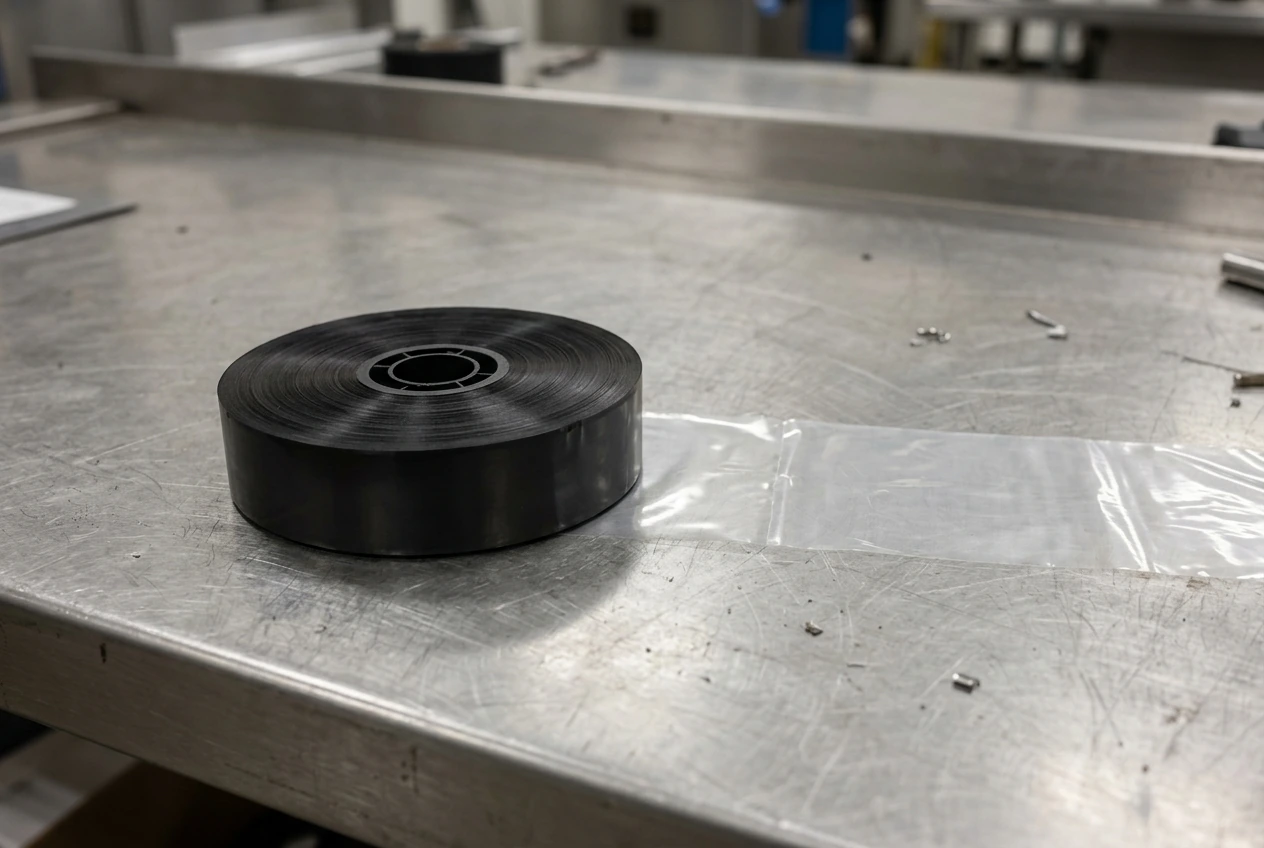
A ribbon and film are separate consumables. Record their supplier references and revisions, plus which surface receives the transfer. Ask the supplier to assess the coating and the intended handling. A successful trial on a different laminate is a useful lead, not an approval for your reel.
| Interface | Information to agree | Evidence to retain |
|---|---|---|
| Film | Material, receiving face and print zone | Reel reference and drawing |
| Ribbon | Supplier reference and matching application | Trial sample and configuration |
| Motion | Whether film stops or keeps moving during printing | Host-machine sequence and measured condition |
| Mechanical support | Station access, backing and permitted adjustment | Integrator’s station drawing |
| Controls | Trigger, ready signal, message and fault response | Sequence record and challenge results |
Confirm what moves during printing
For an intermittent web process, examine the stationary printing opportunity within the machine cycle. For a continuous web process, ask how the coder follows the web’s motion and how that motion is communicated. Obtain the actual coder documentation for the intended mode; do not assume that a unit can switch modes without configuration or mechanical work.
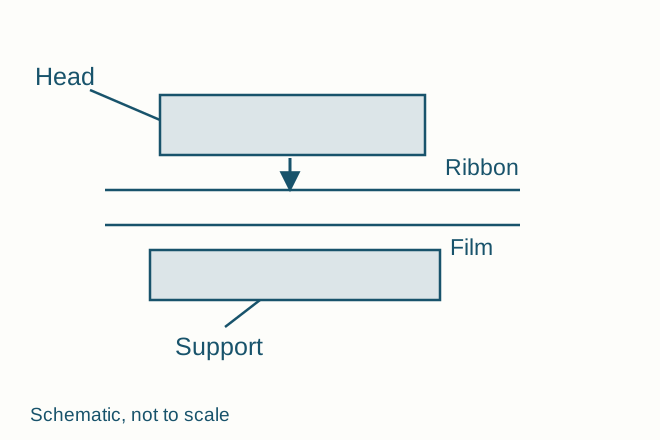
The schematic shows the transfer contact between the head, ribbon and supported film. It does not represent a particular manufacturer’s ribbon path. The installer must use the correct path, orientation and adjustment procedure for the selected model.
Keep physical type changes separate from digital messages
TTO changes the image electronically. A physical hot-foil type holder has a different changeover routine, including character selection and a retained first impression. Comparing those routines can be useful when a line mainly prints simple fixed-format information.
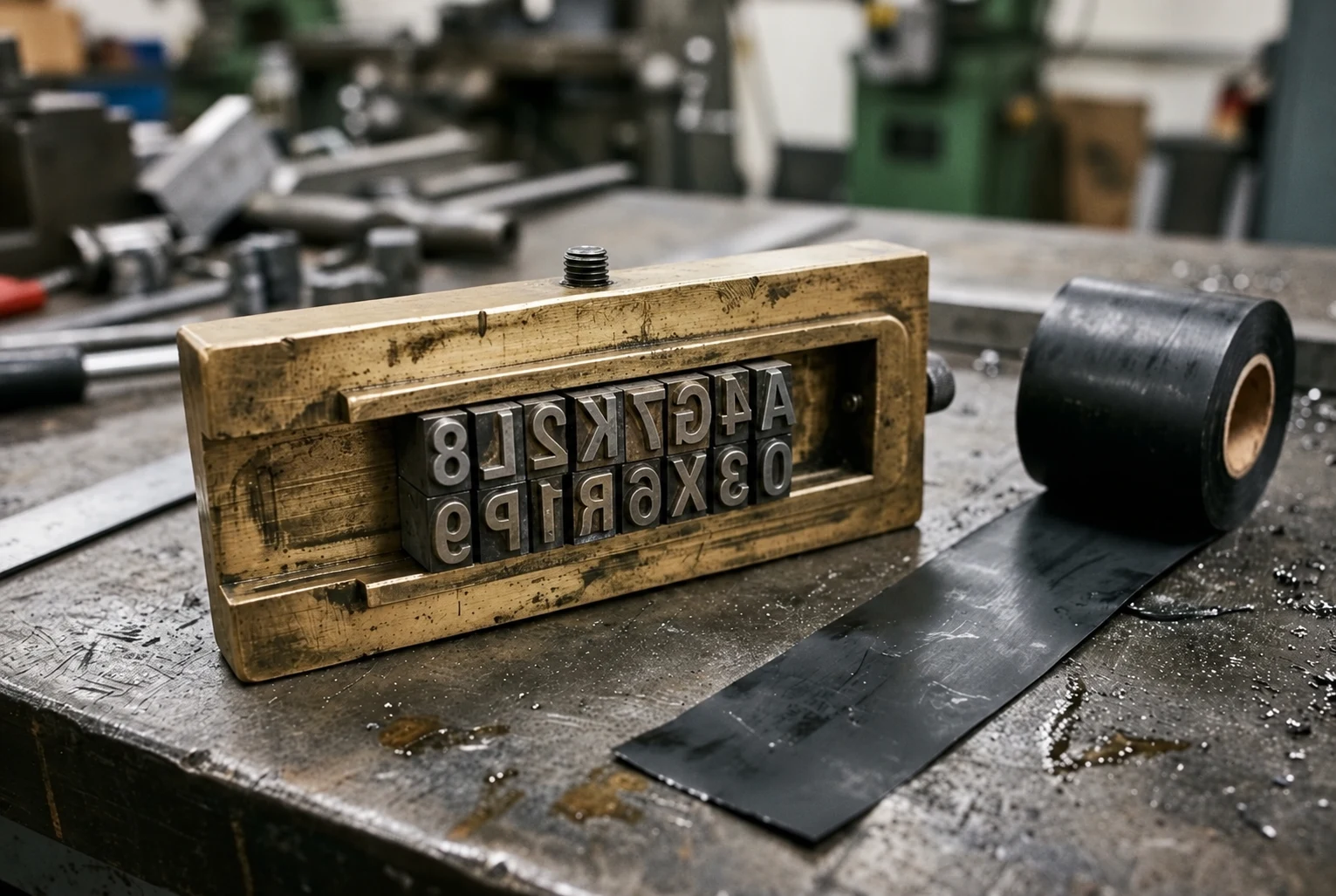
The type-holder scene shows the physical object that a digital message replaces in that comparison. It is not a TTO component. Review the hot-foil guide if that method is also under consideration.
Challenge the interface, not just the print
Prepare an approved message and a deliberately wrong message for a controlled changeover check. Agree how the production team prevents the wrong one from running. Record the acknowledgement from the coder separately from the evidence on the package.
Include a routine stop and restart, ribbon replacement and the relevant film change. Verify the agreed response when the coder is not ready or the print is missing. A presence signal or an image check can be part of that sequence, but the meaning of each signal needs to be explicit. The line integrator should identify which failures stop the machine and which trigger rejection.
Use Videojet’s TTO overview to understand the available application family, then read the selected model’s instructions for the actual consumable and operating limits. No general print speed or ribbon life follows from this guide.
Keep a release pack with the machine record
Retain the film drawing, consumable references, message file and approved sample. Add photographs of print position on the formed package, the controls sequence and the open actions. A material substitution should identify which of those records needs revisiting.
For a symbol rather than plain text, include a barcode verification record with the relevant measurement conditions. Return to the thermal transfer field guide when preparing the next film or coder change.